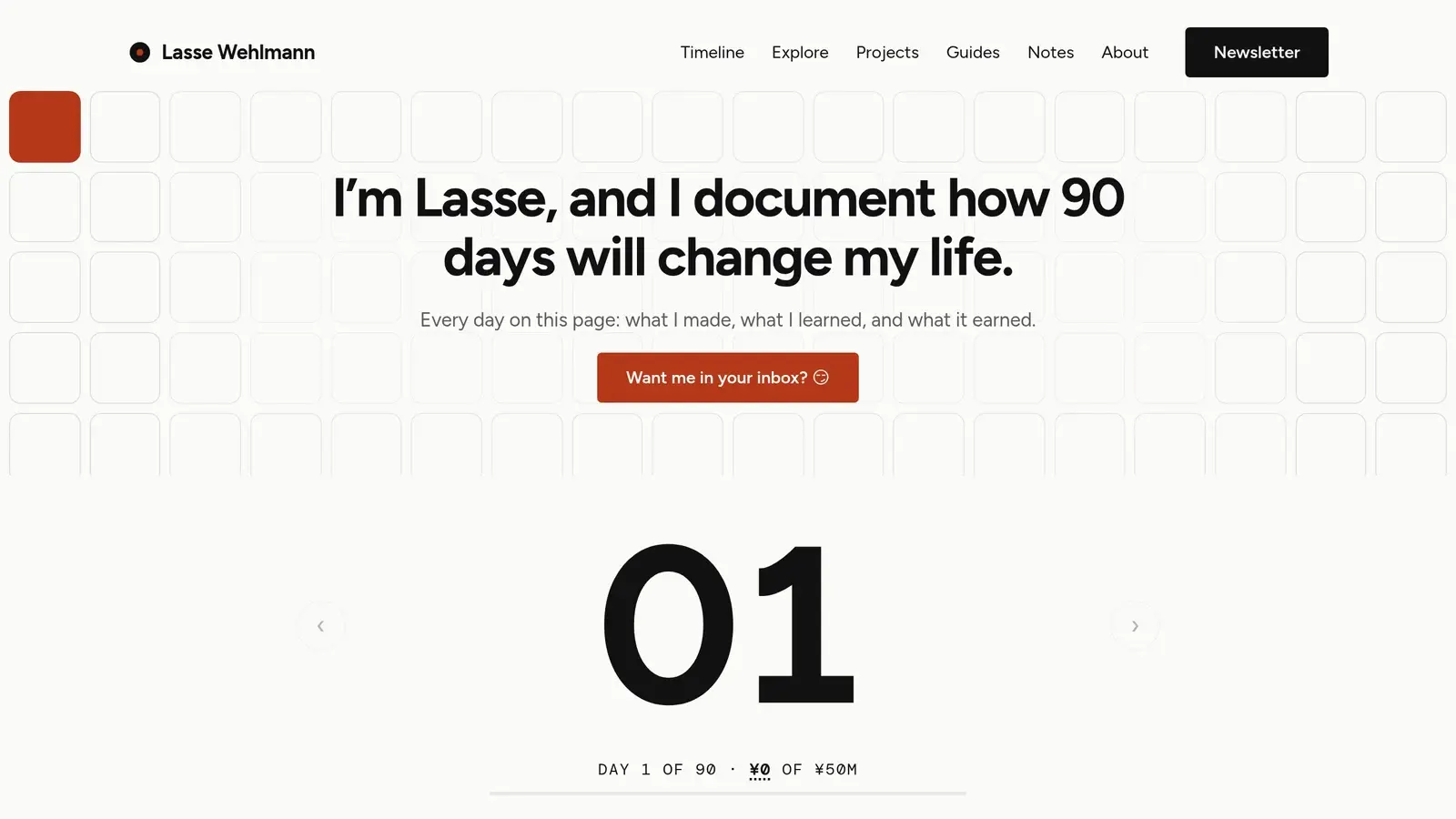
Tired. Excited. And hopeful. the 1st of October 2026 marks the day of my new journey: to secure my god damn visa!
Try or Cry
of ¥50,000,000
I have no idea how many times I've started something new.
It's part of my nature, I have to admit. Which is annoying, but it also comes with a lot of curiosity about what the world has to offer.
A classic double-edged sword.
But I'm at a point in my life where I have to grow up. And by that I mean: I have to see something through.
Making a plan, getting excited about cool ideas, and then throwing everything away the next moment is... useless.
Even worse, it doesn't pay the rent.
I've been living in Japan for one year and ten months now. For most of that time, I lived a comfortable life. At least until I heard about the changes to the Business Manager Visa (30 Million Yen personal investment, or, decline of the Visa.)
Now I'm living a life full of challenges, far outside my comfort zone, but nontheless fun.
Because a life without a challenge, without a purpose to work toward, is a boring one. So I figured.
What I've learned, though, is that this purpose doesn't have to come from an existential threat. But damn, it helps.
If I remember correctly, Robert Greene, author of The 48 Laws of Power, Mastery, and the upcoming Sublime, put it something like this:
Unless your heels are at the edge of the cliff, with one foot already in the grave, there's no urgency, no pressure to become more than you are right now.
I couldn't agree more.
The past year and a half felt like a dream. A very comfortable dream, full of pillows, food, and shelter.
I got soft. Fat. Lazy in my head, to the point where I got angry with myself, because my thinking had become as dull as the 1,000-yen kitchen knife I bought at DAISO the day I moved to Tokyo. (It was sharp, but only on the back, so it kept cutting my hand instead...)
That's another reason for my challenge: 90 days of focusing on ONE THING only. To focus on what matters, to sharpen my tools, to get something done, and to prove that I have it in me.
And to grow up.
PS:
If you ever get the chance, move to a different part of the world. Or at least far enough away that you can't easily see your friends and family. And if you think you can't, do it anyway. Find a way.
It's brutal, beautiful, lonely, exciting, damaging, and healing. But worth it.
My Workspace and How I Approach Social Media
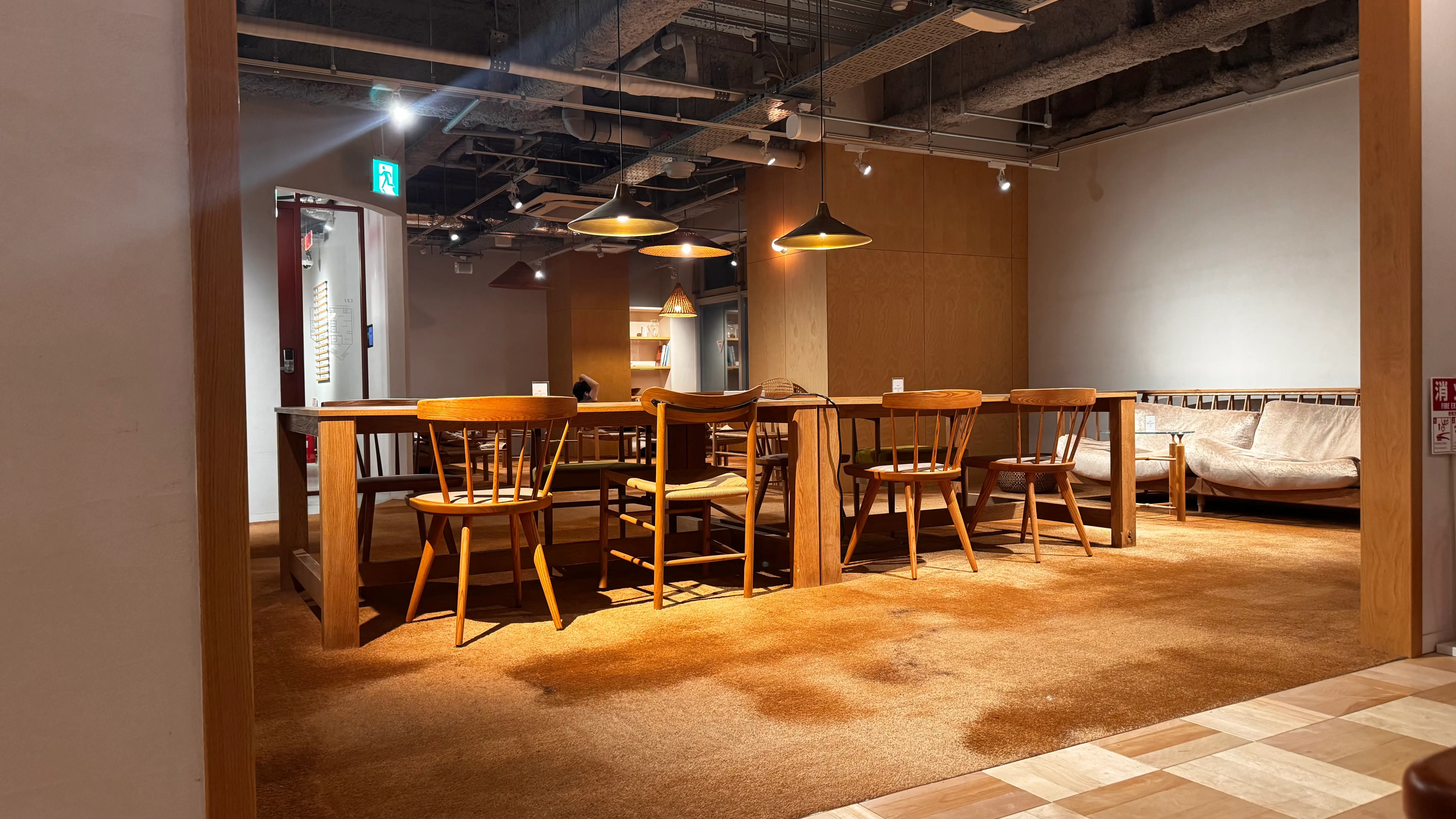
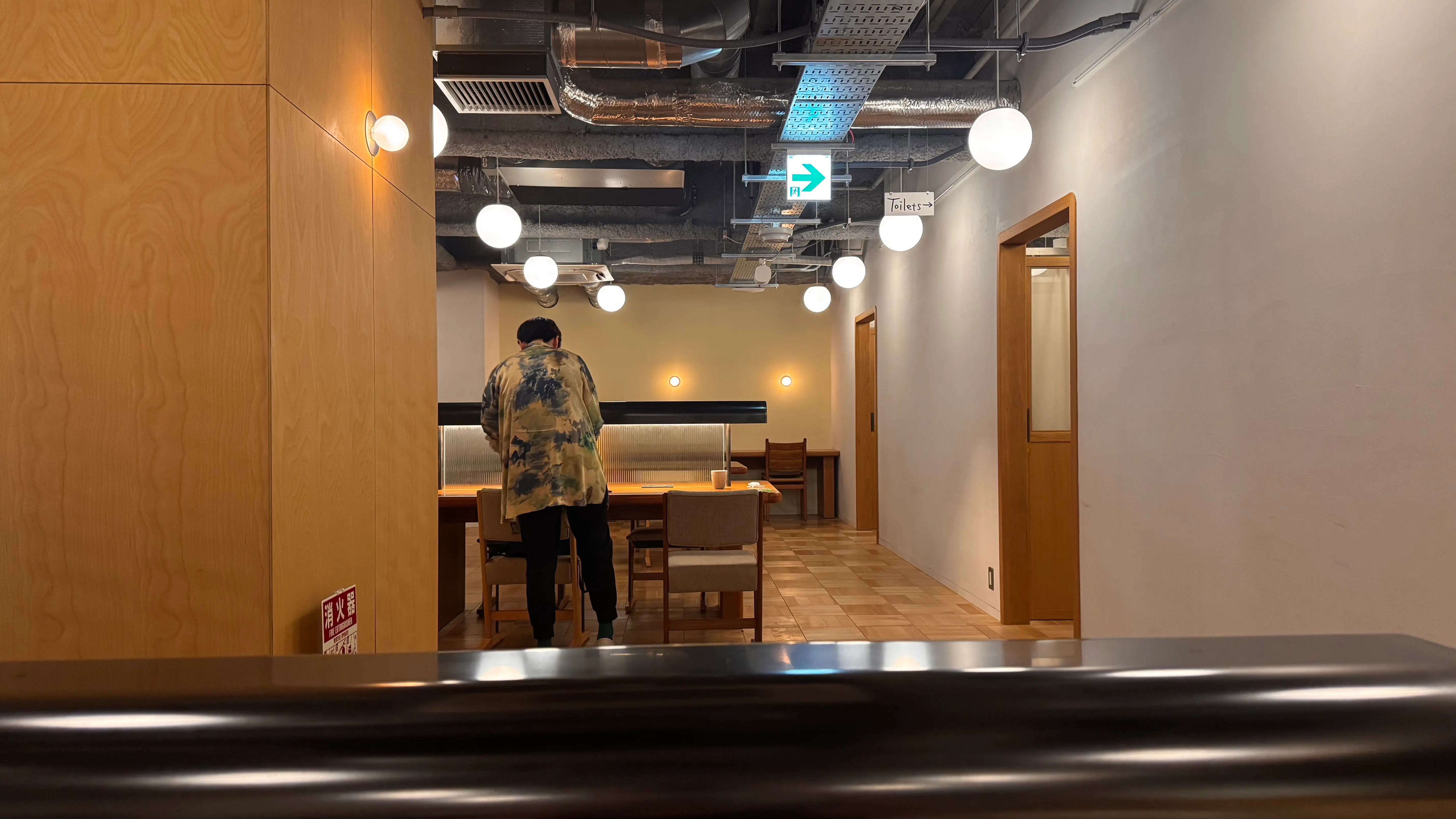
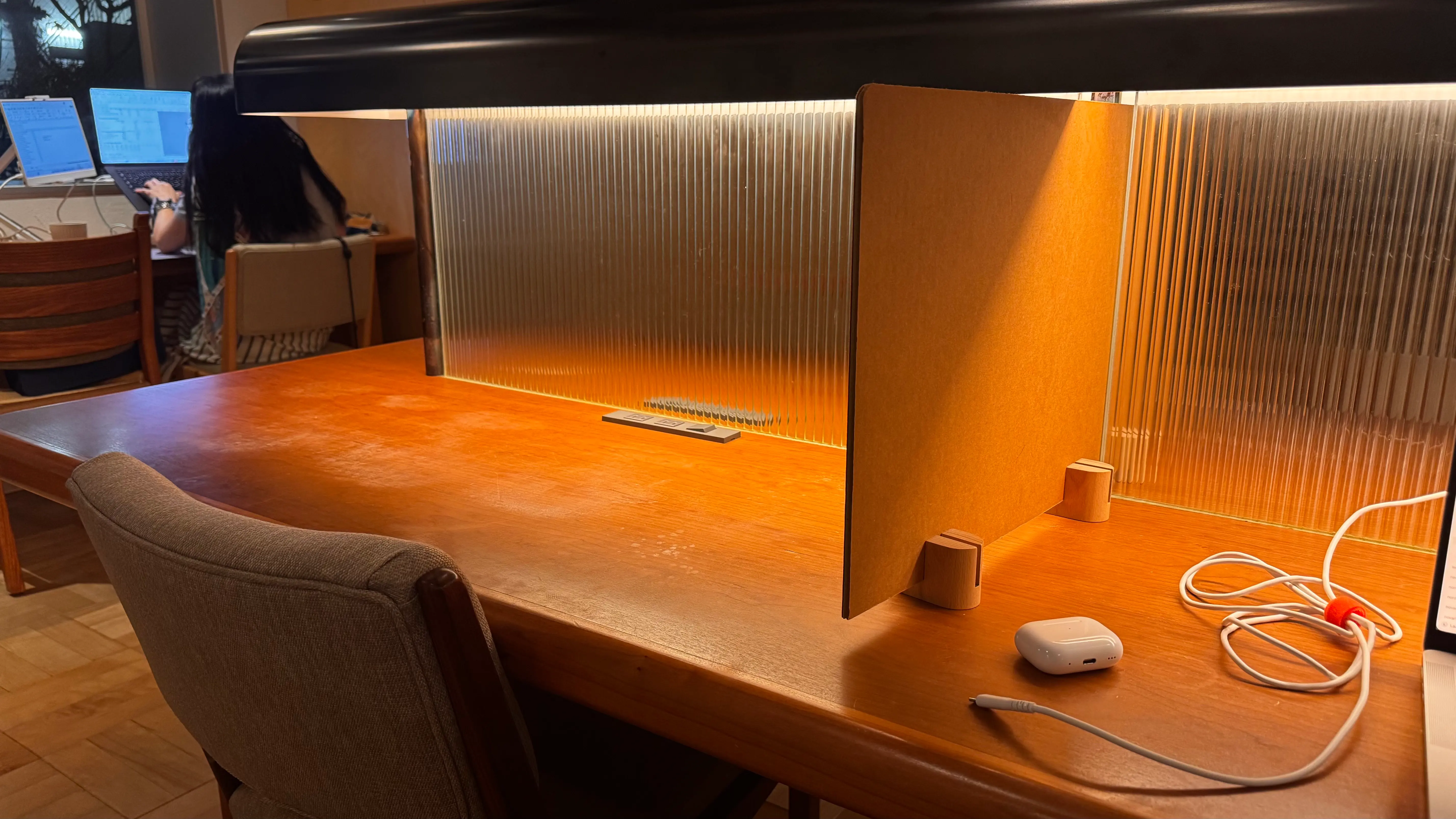
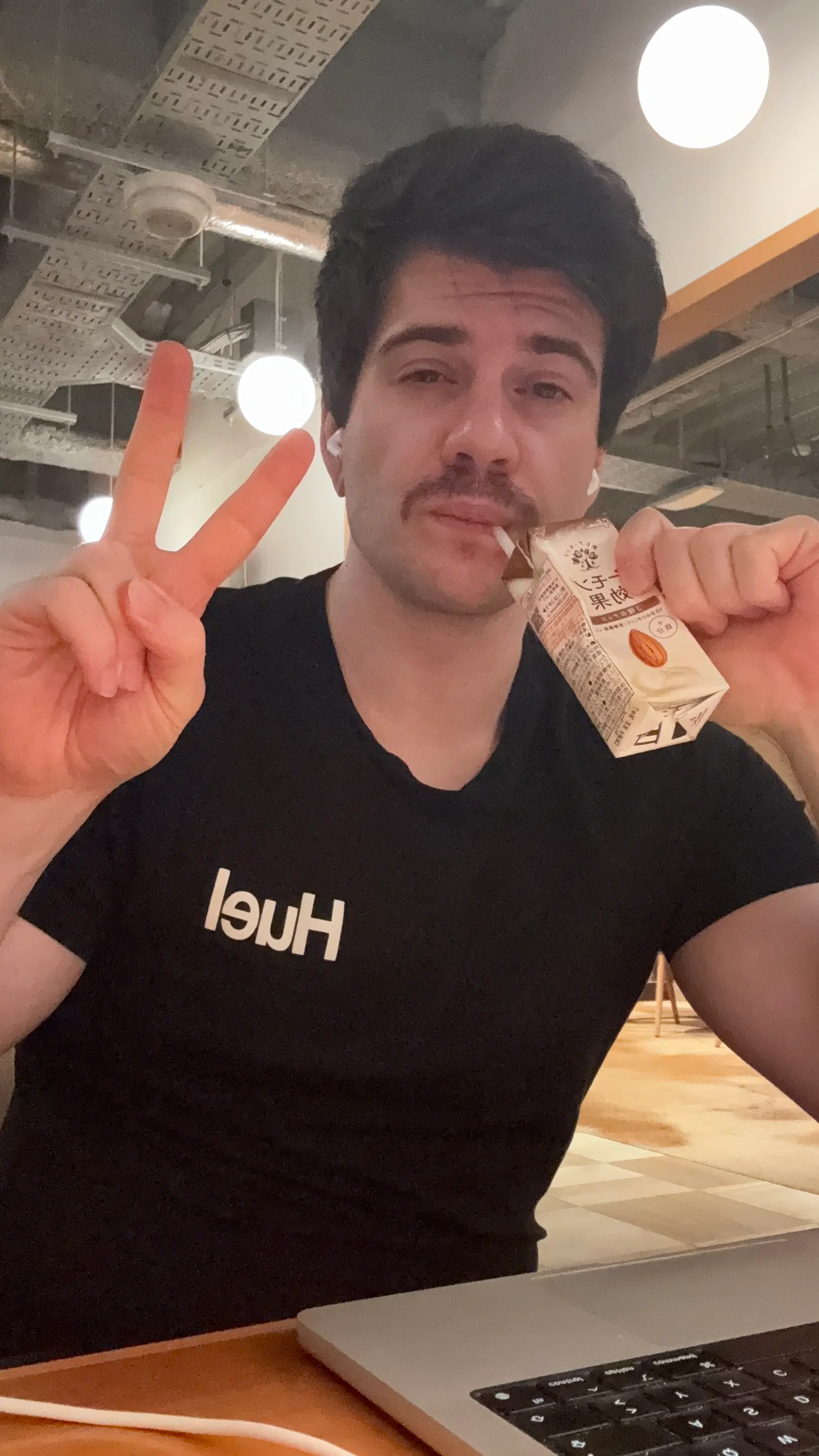
That's me in the co-working space, typing the lines you're reading right now.
I have the best co-working space in Tokyo. Period.
Shimo (as the cool kids call it) is an amazing little neighbourhood with lots of great restaurants and side streets, and no big buildings blocking the view.
For the next 90 days, this is where I'll be spending my time.
The tables are low enough that my shoulders don't end up at my ears. There's a balcony, a small kitchen with a microwave, better chairs than I have at home, and people who are actually working, which is surprisingly motivating. And Café GRASS offers free, freshly made drinks.
I'm not sure I'm "influencer enough" yet to do a "room tour", but I'll share some pictures and videos over the next few weeks.
Instagram, Scripting, and Content
This isn't the first time I've started my "influencer career".
I've tried LinkedIn, Instagram, Twitter (yes, Twitter, not X. We're Team Blue Bird here), and Threads. Each one for a couple of posts, until I lost my "motivation".
Actually, I don't think I can call it motivation. Or even an attempt. I just had the thought of becoming a super cool influencer, posted something, and gave up.
So, as we can both see: no success so far. Which is no surprise.
I never put in the effort.
And I never thought of social media as a real part of my life (other than mindless, addictive scrolling).
A writer who doesn't write is not a writer. And a creator who doesn't create is not a creator.
It's as simple as that. So I'd better freaking start. Again.
So, what am I doing differently now?
My Social Media Game, Summarised
Here's what I did before, and where I failed: I didn't think, research, script, or plan. I didn't even post consistently.
So let's go through each part quickly. I'll keep it short.
Thinking
I never put in the upfront effort of thinking about what I want from social media and my posts.
Skipping that step is like opening a business without knowing whether it's a restaurant, a printing service, a travel agency, or a construction company. In other words: it's bound to fail. So I asked myself:
Why do I want to be on social media?
What is my intention?
How do I want to communicate?
With whom?
What do I have to offer?
What do I know?
What are my resources?
What don't I know, and where can I find the answers?
What are my constraints?
Answering these questions helped me get my head in the game.
Research
Without research, I'm trying to solve problems that others have already solved.
Before, I trusted my gut that I'm a great storyteller because I can talk freely to a camera. But guess what? The number of words doesn't equal the quality of the story.
Especially in the beginning, I spend a big part of my time following advice from creators like AVA | Personal Brand Coach on Instagram, simply because it gives me a starting point and a structure for my journey. Tools of Titans, as Tim Ferriss would say.
My research covers:
Hooks
Scripts
Thumbnail design
Filming
Editing
Social media formats
Coffee (a lot)
Scripting
But what is research without practice? A good script is worth a thousand dollars. Or, if I'm dreaming big, 50 million yen by the end of the 90 days.
And here's the funny thing: writing a script isn't that hard. It'll probably be a bad one, but as Hemingway supposedly said: "The first draft of anything is shit." So I follow that great advice and get my first draft out as quickly as possible, so I can get to the editing. And here's the cool part: with every edit, the script gets better. Over time, so do your first drafts.
Another trick I use is reading my scripts out loud. When you speak, you notice the flow: missing words that would make it enjoyable and rhythmic, words that aren't needed, and phrases that don't make sense.
Another big tip: keep it focused. One idea, one point. Just like in real life, if you talk about too many things at once, it's hard to follow.
Thumbnail design
Not much to say here, to be honest. I still follow AVA's advice. A thumbnail should contain:
A written hook
A simple image
A visual hook
Filming
I decided to keep things simple in the beginning. Which means: I yap.
Yapping comes naturally to me. Good yapping doesn't. That's why I rely on scripts.
On filming days, I print out my scripts. Each script is split into parts that I can easily say or repeat. Long blocks of text are dangerous, because they take too long to redo and fix. Bite-sized chunks are key.
Editing
There are so many editing tools out there that it really doesn't matter which one you pick. At least, that's what I'd like to say.
But the software needs a captions and translation feature.
DaVinci Resolve is free, but the free version lacks auto-captions.
CapCut's new terms of service worry me.
Edits (Instagram's editing app) seems to be the king of phone editing.
Final Cut Pro is for the MacBook and for bulk editing.
Editing also depends on the format. For example:
Voiceover: a visual change every 3 seconds
Yapping: a cut every 5 to 7 seconds, with visuals added within each block to hold attention
I'll share more about what I've learned, and what I'm still learning, over the coming weeks.
Formats
I wouldn't have guessed that I'd become someone who relies on formats. But it makes sense. Good authors rely on formats too. Making something repeatable is how you make it good over time. Honestly, I should have followed this advice much earlier in my life.
Social media formats are incredible to learn from. They give a video structure.
Formats include things like:
Back-and-forth
Talking to camera
Voiceover
Angle changes
Clone
Whiteboard
Q&A
Screen recording / green screen
Slides
Reaction
You can pair each format with different scripts. For example, both a story script and a "this vs. that" script work for back-and-forth or whiteboard videos.
Posting
Well, as you can see, instead of posting, I'm procrastinating by writing these lines. So I'll stop here and get back to my first post: my mission post, with the hook:
"I'm scared. I have 24 months to make 30 million yen, or I get kicked out of Japan because of the new visa rules... But here's the problem."
PS: I'm not sure anyone is reading this. But future me, if you're reading this again: you've got this. I knew it all along.
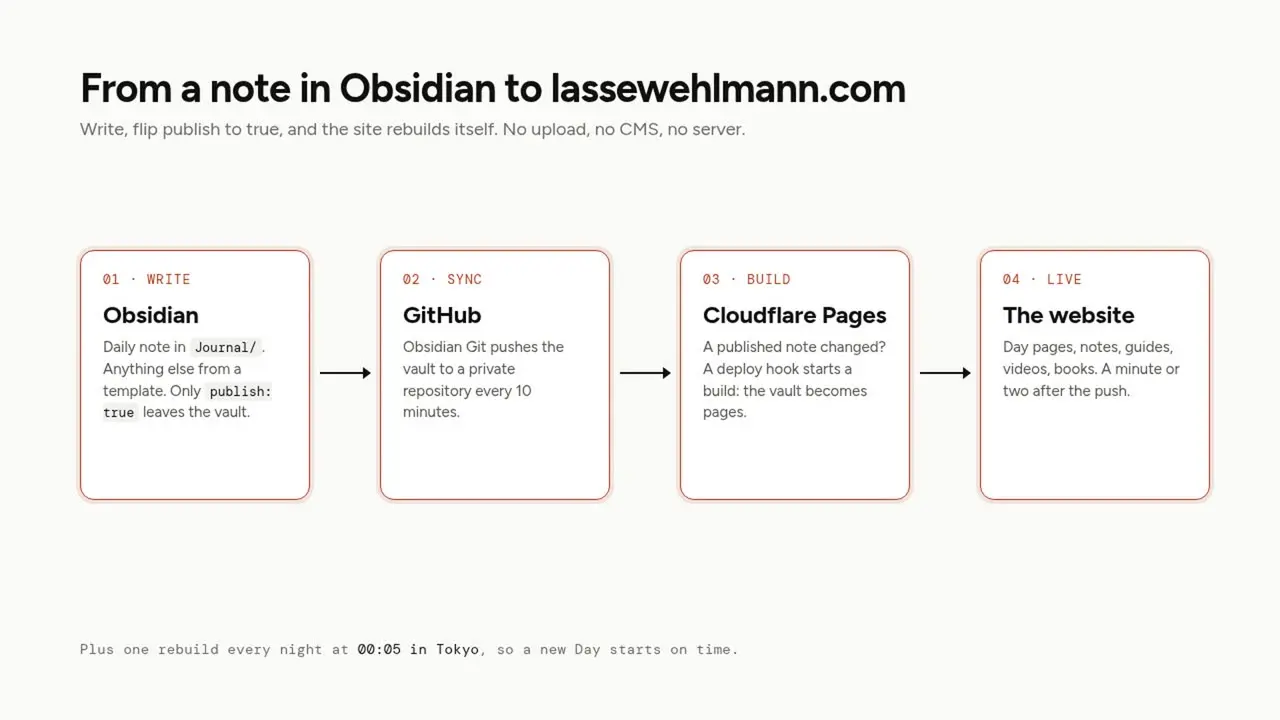
I write in Obsidian, a private GitHub repository keeps the notes, and Cloudflare builds this website from them for free. The whole setup, from the first wireframe to Day 1.